CUEELF 5-in-1 Pool Cue Tip Repair Cube
The CUEELF 5-in-1 tip repair cube is built for players who want to maintain their tip between professional retips — no lathe required, no sandpaper improvisation. It covers every routine maintenance task in one pocket-sized stainless steel tool, sized to work on tip diameters from standard 9mm jump tips up through 13.5mm break tips. If you own a cue worth maintaining, this is the tool that keeps it playing the way it's supposed to.

The Tool, Fully Specified
5-in-1 Tip Repair Cube
See on AmazonSee more products
Discover the full product lineup with current selection on Amazon.
All products on AmazonKey Specifications
Full specs for the CUEELF 5-in-1 tip repair cube, as listed on the product.
| Functions | Shaper, Scuffer, Aerator, Burnisher, Pick (5-in-1) |
|---|---|
| Material | Stainless Steel |
| Weight | 41 grams (0.04 kg) |
| Dimensions | 2.83 × 2.52 × 1.34 inches |
| Compatible tip diameters | 9.3mm – 13.2mm |
| Color | Grey |
| Suggested users | Adult players (unisex) |
| Warranty | No manufacturer warranty stated |
| Model | 5in1 pool cue tip repair (B0B9NPT3XL) |
At 41 grams and under three inches on its longest side, this tool fits in any cue case pocket — it's sized for players who want complete tip maintenance available at the table, not just at home.
What Each of the Five Functions Actually Does
The names on the five faces of this cube — shaper, scuffer, aerator, burnisher, pick — aren't marketing shorthand. Each one addresses a distinct condition that shows up in real play, and using the wrong function for the wrong problem is how tips get damaged rather than maintained. Here's what you're actually doing with each one.
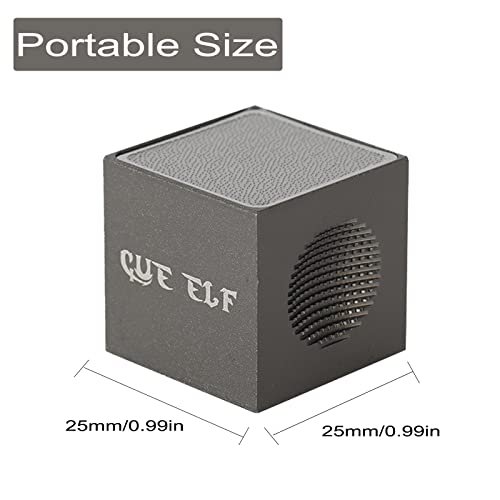
- Shaping restores the curvature of the tip face. A tip that's gone flat from hard use will skid across the cue ball rather than grip it at contact. The shaper on this cube is sized to produce a consistent dime-to-nickel radius — the range most players and instructors recommend for a playing cue tip. Flat tips miscue; shaped tips don't.
- Scuffing roughens the tip surface so chalk has something to hold onto. A smooth, glazed tip sheds chalk on impact — you'll see it spray off rather than stay put. Scuffing before you chalk up restores that grip. This is the face most players will use most often between sessions.
- Aerating goes deeper than scuffing. The aerator uses small pins or teeth to open up the tip's surface pores, improving chalk penetration rather than just surface adhesion. On a compressed or hardened tip, aerating can extend the useful life significantly before a full retip is necessary.
- Burnishing compresses the sides of the tip to prevent mushrooming — the outward flaring that happens when a tip takes repeated hard strikes without side support. A mushroomed tip loses its fit against the ferrule and starts to cause miscues at the edge. Burnishing after reshaping keeps the tip compact and properly seated.
- Pick insertion uses the spike face to roughen and open the tip face when it's become heavily compressed or glazed beyond what scuffing alone can fix. Think of it as the reset option before you reach the point of needing a shop.
Used in sequence — shape first, then burnish the sides, then scuff or aerate the face, then chalk — this tool produces a tip that grips consistently and holds its geometry through a full session. Skipping steps is the most common mistake; the cube is small enough to keep in your case and run through the sequence before every session if the tip warrants it.
When to Use This Tool and When You Need a Shop
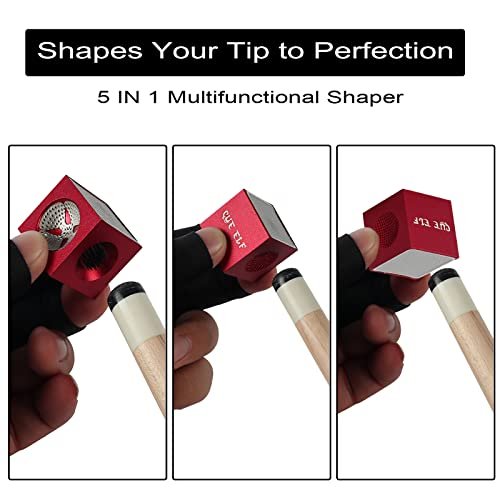
The 5-in-1 cube handles every maintenance task between professional retips. It does not replace a lathe for a full retip, and no hand tool does — gluing a new tip, trimming it flush, and profiling it correctly requires equipment this cube isn't designed to replicate. If your tip is delaminating, cracking through its base, or worn down past the ferrule edge, take it to a pool hall with a lathe. What the cube handles is everything short of that.
Here's a practical breakdown of when each scenario calls for the cube versus a shop:
- Tip is flat or slightly domed but structurally intact — shape it with the cube. Five minutes of careful work on the shaper face restores the radius without removing more tip than necessary.
- Tip is glazed and chalk won't stick — scuff or aerate it. This is the most common situation after several weeks of play, especially on harder tips like layered leather.
- Tip is mushrooming at the edges — burnish it. Catch this early and the tool can compress the sides back before the flare becomes structural. Let it go too far and the tip may need trimming on a lathe.
- Tip is worn to 2mm or less, cracking, or separating from the ferrule — go to a shop. The cube cannot reglue, trim, or seat a new tip.
For players who don't live near a billiards shop with a lathe — or who simply want to stop paying shop rates for routine maintenance they can handle themselves — the cube covers the 90% of tip work that happens between full retips. That includes the jump and break tips on a multi-function cue like the CUEELF Heavy Hitter, where a Bakelite tip requires its own maintenance rhythm (primarily aerating and burnishing rather than shaping, since Bakelite doesn't mushroom the way leather does).
Storage, Maintenance, and Getting the Most from the Tool
The cube is stainless steel and weighs 41 grams — about the weight of a standard set of keys. It won't corrode, it won't degrade with contact against chalk dust or grip wax, and it doesn't require any maintenance of its own beyond keeping the working faces clear of built-up tip material. After shaping or aerating, run a dry cloth or brush across the face to clear leather debris from the teeth. Packed with material, the shaper and aerator faces work less efficiently and can score a tip unevenly.
Storage is straightforward: it fits in a cue case pocket, a chalk bag, or the side pocket of a gear bag. At 2.83 × 2.52 × 1.34 inches, it's smaller than most chalk holders and light enough that there's no reason to leave it at home. Players who carry it in the case can run through a quick maintenance check before sitting down to shoot — shape, burnish, scuff, chalk — which adds two minutes of prep and removes the variable of a degraded tip mid-session.
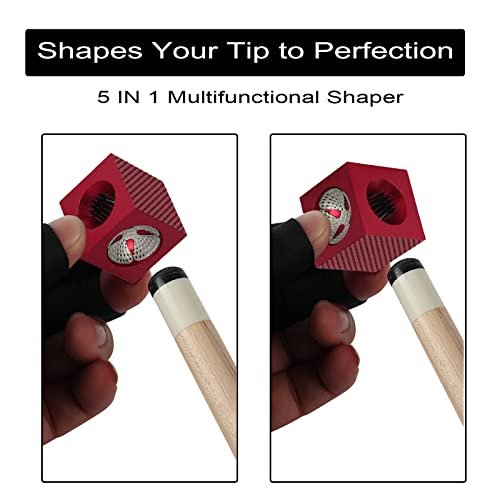
One practical note on tip hardness and tool pressure: softer single-piece leather tips (common on older or inexpensive cues) respond to light pressure on the shaper and aerator. Harder layered tips require more consistent pressure and more passes to achieve the same result. Don't rush the shaping process on a layered tip — slow, even passes across the face produce a cleaner radius than aggressive short strokes. The stainless steel construction means the tool won't wear out before the tip does, but the tip will if you apply too much force too fast.
Frequently Asked Questions
Does this tool work on Bakelite break tips, or only leather?
The burnisher and aerator faces work on Bakelite, but the shaper is primarily useful for leather tips. Bakelite doesn't mushroom or lose its radius the way leather does — what it loses over time is surface porosity for chalk adhesion. Run the aerator face across a Bakelite tip that's gotten slick, then apply chalk heavily before breaking. Shaping a Bakelite tip with the cube isn't necessary in normal use and isn't recommended, since Bakelite is hard enough that aggressive shaping risks uneven results without a lathe to true the face.
Can I use this to install a brand new tip without a lathe?
No. The 5-in-1 cube handles maintenance on an existing, installed tip — shaping, scuffing, aerating, burnishing, and pick work. It does not glue, trim, or seat a new tip. Installing a new tip correctly requires a lathe to trim the tip flush with the ferrule and profile the face accurately. If your tip needs replacing, take the cue to a shop. Use this tool to extend the life of a good tip so you need that shop visit less often.
How often should I shape and scuff my tip?
Scuffing before every session (or every few sessions for casual players) is a reasonable baseline — a glazed tip will always underperform a properly scuffed one, and the scuffer face takes about 30 seconds to use. Shaping depends on how often you play and how hard you strike. A league player who shoots three nights a week might reshape every two to three weeks; a casual weekend player might go a month or more between reshapes. The test is simple: press a dime against the tip face. If the tip's curvature matches the dime's edge, it's still in shape. If it's flatter, it needs reshaping.
Will this work on the smaller tips found on jump cues?
Yes. The tool is rated for tip diameters from 9.3mm to 13.2mm, which covers the range from standard jump cue tips (typically 10–11mm) through 13mm playing cue tips and up to most break cue tips. If you're running a very narrow specialty jump tip below 9mm, the shaper and burnisher faces may not contact the tip edge cleanly — but for any tip in the standard range, the cube works across the whole diameter without adjustment.
Is there a warranty if the tool breaks or the faces wear out?
The product listing states no manufacturer warranty. That said, stainless steel construction means the working faces are not going to degrade under normal use — the teeth, pins, and shaping surfaces are cut into solid metal, not applied as a coating. The tool should outlast multiple tip cycles on any cue you're maintaining. If a face is defective out of the box, that's worth raising through the purchase channel directly.